arborist study guide
Arborist Study Guide: A Comprehensive Plan
Preparing for the ISA Certified Arborist exam requires a dedicated plan, utilizing resources like the Arborist Certification Study Guide and Georgia Arborist YouTube videos.
Understanding the ISA Certified Arborist Exam
The ISA (International Society of Arboriculture) offers a globally recognized Arborist Certification Exam, validating an arborist’s expertise in tree care. This certification is highly valued within the industry, demonstrating a commitment to professional standards. Candidates should familiarize themselves with the exam’s scope, which covers a broad range of arboricultural knowledge.
Successful completion requires thorough preparation, often utilizing a dedicated study guide. Resources like the Arborist Certification Study Guide, now in its fourth edition, provide a strong foundation. Understanding the exam’s structure and content is the first crucial step towards achieving certification and advancing one’s career.
Exam Format and Content Breakdown
The ISA Certified Arborist exam is a comprehensive assessment of an arborist’s knowledge base. It’s designed to evaluate practical skills and understanding of tree care principles. The exam itself is fully illustrated, featuring over 440 photos to aid comprehension. Candidates should expect questions covering tree biology, identification, pruning, soil science, and pest/disease management.
Preparation necessitates a complete and up-to-date resource, such as the Arborist Certification Study Guide. Mastering the content within this guide, alongside supplemental materials, is key to success. A thorough understanding of each section’s weight is vital for focused studying.

Key Study Resources
Effective preparation for the ISA Certified Arborist exam relies on utilizing a variety of study resources. The Arborist Certification Study Guide, now in its Fourth Edition by Lilly, Bassett, Komen, and Purcell, is considered essential. Complement this with the Georgia Arborist review videos available on YouTube – many find them remarkably helpful.
Consider both print and audio formats; the study guide is available as an audiobook. ISA members receive a discounted price. Remember to prioritize a strong foundation by reading the study guide before watching supplemental videos for optimal learning and retention.
ISA Certification Requirements
Achieving ISA Certified Arborist status necessitates passing the rigorous ISA Arborist Certification Exam. This exam, developed and administered by the International Society of Arboriculture, validates a candidate’s expertise in tree care. Successful completion demonstrates a commitment to industry best practices and professional development.
Preparation is key, and resources like the Arborist Certification Study Guide are vital. While specific prerequisites may vary, a solid understanding of arboricultural principles, as covered in comprehensive study materials, is fundamental to meeting the certification standards.
Tree Biology Fundamentals
A strong grasp of tree biology is crucial for any aspiring arborist, forming the bedrock of effective tree care practices. The Arborist Certification Study Guide thoroughly covers essential concepts, including tree anatomy, physiology, and the intricate processes that govern tree growth and health.
Understanding these fundamentals allows arborists to accurately diagnose issues, implement appropriate treatments, and promote long-term tree vitality. Mastery of this subject matter is directly assessed on the ISA Certified Arborist exam, demanding dedicated study.

Photosynthesis and Respiration

Delving into photosynthesis and respiration is paramount for arborist certification, as these processes dictate a tree’s energy production and utilization. The Arborist Certification Study Guide provides a detailed exploration of these vital functions, explaining how trees convert light energy into chemical energy and how they release energy for growth and maintenance.
A comprehensive understanding of these biological mechanisms is essential for assessing tree health, diagnosing stress factors, and implementing effective management strategies. Expect thorough testing on these concepts during the ISA exam.
Tree Identification
Accurate tree identification forms a cornerstone of arboricultural practice and is heavily emphasized on the ISA Certified Arborist exam. The Arborist Certification Study Guide, fully illustrated with over 440 photos, is an invaluable resource for mastering this skill. Candidates must learn to distinguish trees based on leaf shape, bark characteristics, branching patterns, and overall form.
Proficiency in identification allows for proper species-specific care, accurate pest/disease diagnosis, and informed risk assessment. Thorough study and field practice are crucial for success.
Tree Anatomy and Physiology
A deep understanding of tree anatomy and physiology is fundamental for any aspiring arborist, and a key component of the ISA certification process. The Arborist Certification Study Guide, Fourth Edition, provides a strong foundation in these areas, serving as both a study aid and a comprehensive reference.
Candidates must grasp the functions of roots, stems, leaves, and reproductive structures, alongside processes like translocation and hormone regulation. This knowledge informs proper pruning, diagnosis, and overall tree health management.

Soil Science for Arborists
Soil science is critically important for arborists, influencing tree health and stability. The Arborist Certification Study Guide dedicates significant attention to this area, preparing candidates for exam questions and real-world scenarios. Understanding soil composition and structure is paramount, alongside nutrient availability and root function.
Arborists must learn how soil properties impact water infiltration, aeration, and overall root development; This knowledge is essential for informed decisions regarding soil testing and amendments, ensuring optimal growing conditions for trees.
Soil Composition and Structure
A thorough understanding of soil composition – sand, silt, clay, and organic matter – is fundamental for arborists, as detailed within the Arborist Certification Study Guide. Soil structure, referring to how these particles aggregate, directly impacts aeration, drainage, and root penetration.
Arborists must recognize how different soil types affect tree species suitability and potential problems. Learning about soil horizons, compaction, and the role of microorganisms is crucial. This knowledge informs best practices for soil management and amendment strategies, promoting healthy root systems.
Nutrient Management
Effective nutrient management is vital for tree health, covered extensively in resources like the Arborist Certification Study Guide. Arborists need to understand essential macronutrients (nitrogen, phosphorus, potassium) and micronutrients, recognizing deficiency symptoms and their causes.
Proper fertilization techniques, considering soil testing results and tree species needs, are paramount. Over-fertilization can be detrimental, impacting tree health and the environment. Understanding nutrient uptake processes and the role of soil pH is crucial for informed decision-making regarding amendments.
Soil Testing and Amendments
Soil testing is fundamental to informed nutrient management, a key component detailed within the Arborist Certification Study Guide. Analyzing soil pH, nutrient levels, and organic matter content allows arborists to diagnose deficiencies and tailor amendment strategies.
Common soil amendments include compost, manure, and specialized fertilizers. Understanding amendment impacts on soil structure, drainage, and nutrient availability is crucial. Corrective actions based on test results ensure optimal growing conditions, promoting tree health and vigor, avoiding detrimental over-application.
Pruning Techniques
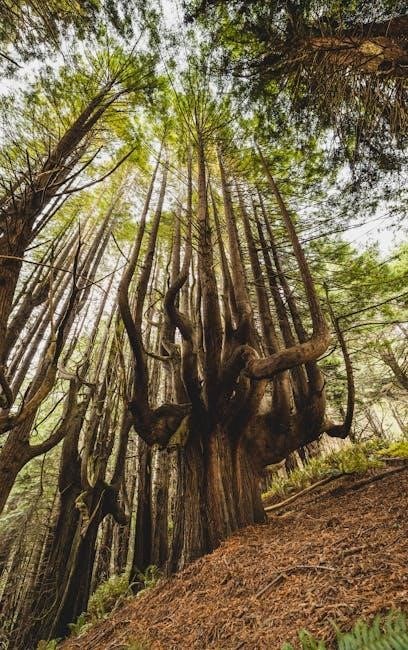
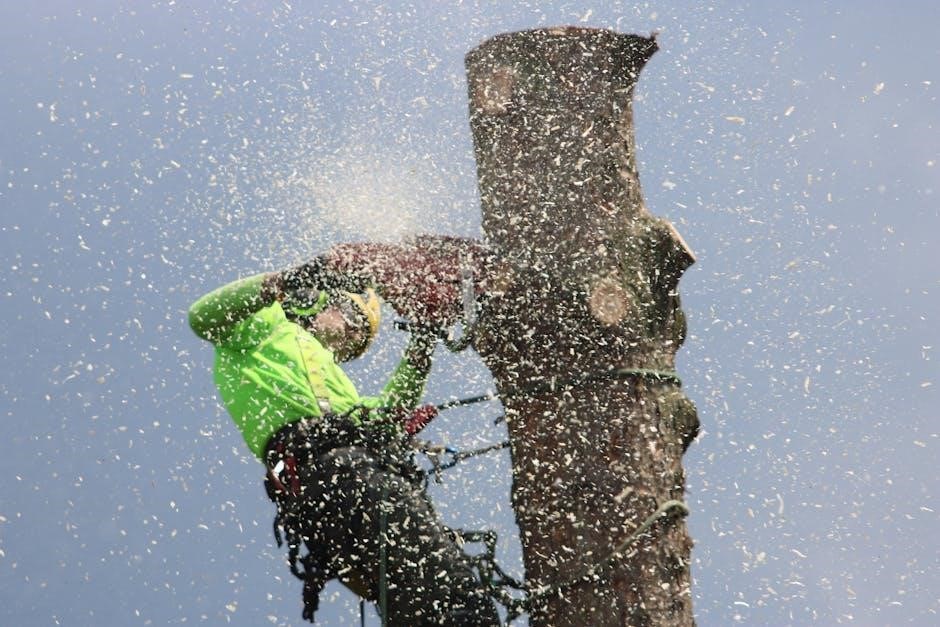
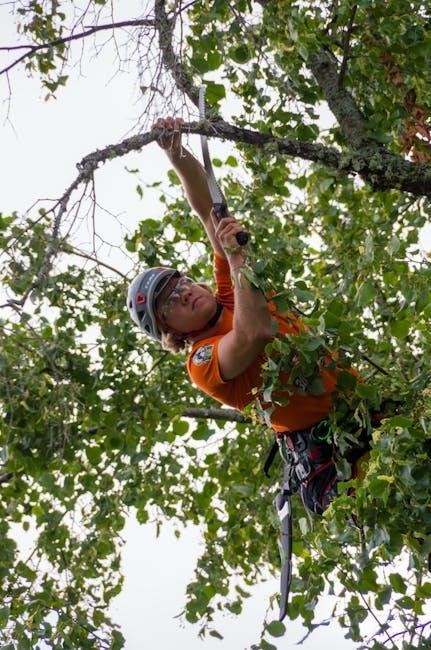
Pruning, as covered extensively in resources like the Arborist Certification Study Guide, is a vital skill for maintaining tree health, structure, and safety. Mastering various techniques – including crown thinning, reduction, and restoration – is essential for exam success.
Understanding the principles of proper branch selection, making clean cuts, and avoiding over-pruning are paramount. Knowledge of woundwood and compartmentalization is also critical. Safe pruning practices, utilizing appropriate equipment, are emphasized throughout the study materials.
Pruning for Structure and Health
Pruning significantly impacts a tree’s long-term structure and overall health, as detailed within the Arborist Certification Study Guide. Strategic pruning establishes a strong central leader, balanced crown, and reduces future risk. Removing dead, diseased, or crossing branches improves air circulation and light penetration.
Correct pruning stimulates growth, enhances flowering/fruiting, and corrects structural defects. Understanding how different pruning cuts influence growth patterns is crucial. Prioritizing tree health through preventative pruning minimizes the need for more drastic interventions later, ensuring longevity.
Woundwood and Compartmentalization
Woundwood, a callus tissue, forms around tree wounds as a natural defense, a concept thoroughly covered in the Arborist Certification Study Guide. Crucially, trees don’t “heal” like humans; instead, they compartmentalize decay. This process walls off damaged areas, preventing spread.
Understanding CODIT (Compartmentalization Of Decay In Trees) is vital for proper pruning techniques. Avoiding flush cuts, which remove the branch collar, allows for effective compartmentalization. Recognizing how a tree responds to injury informs pruning decisions, minimizing long-term decline and maximizing tree health.
Safety in Pruning
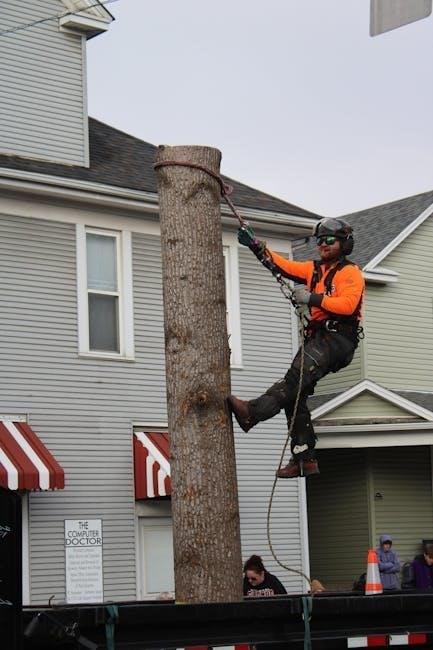
Pruning safety is paramount, and the Arborist Certification Study Guide emphasizes comprehensive risk assessment before each cut. Proper Personal Protective Equipment (PPE) – helmets, eye protection, hearing protection, gloves, and appropriate footwear – is non-negotiable.
Understanding safe climbing techniques, rigging systems, and aerial lift operation are crucial. Maintaining situational awareness, recognizing hazards like electrical wires, and adhering to ANSI A300 standards are essential. Prioritizing safety protects both the arborist and the surrounding environment, ensuring responsible tree care practices.
Tree Risk Assessment
Tree risk assessment, a core component of arborist expertise, is thoroughly covered within the Arborist Certification Study Guide. Identifying hazard trees requires evaluating factors like decay, structural defects, and proximity to targets. Understanding risk assessment methodologies, including those outlined by the ISA, is vital for determining potential failure scenarios.
Effective mitigation strategies, ranging from pruning to cabling/bracing or even removal, are crucial for minimizing risk. A systematic approach, coupled with diligent documentation, ensures responsible tree management and public safety.
Hazard Tree Identification
Hazard tree identification is a critical skill honed through resources like the Arborist Certification Study Guide. Recognizing signs of weakness – decay, cracks, leaning trunks, and significant deadwood – are paramount. Assessing a tree’s overall health and structural integrity forms the foundation of a proper evaluation.
Understanding how environmental factors, such as wind exposure and soil conditions, contribute to potential failures is also essential. Accurate identification allows for proactive risk mitigation, protecting people and property from potential harm.
Risk Assessment Methodologies
Risk assessment methodologies, detailed within the Arborist Certification Study Guide, provide a systematic approach to evaluating tree hazards. These methods involve determining the likelihood of failure and the potential impact should failure occur. Quantifying risk levels – low, moderate, or high – guides informed decision-making.
Common methodologies include visual tree assessment and advanced techniques utilizing specialized tools. Understanding these frameworks is crucial for arborists to effectively communicate risks to stakeholders and implement appropriate mitigation strategies, ensuring public safety.
Mitigation Strategies
Mitigation strategies, a key component covered in the Arborist Certification Study Guide, focus on reducing identified tree risks. These strategies range from pruning deadwood and cabling/bracing weakened limbs to complete tree removal when hazards are unavoidable. Proper implementation requires a thorough understanding of tree biology and structural mechanics.
Effective mitigation also includes preventative measures like regular inspections and appropriate tree selection during planting. Documenting all assessments and actions is vital for liability protection and demonstrates professional diligence.
Pest and Disease Management
Pest and disease management, thoroughly addressed within the Arborist Certification Study Guide, emphasizes an Integrated Pest Management (IPM) approach. This prioritizes preventative strategies like maintaining tree health through proper pruning and fertilization, fostering natural defenses. Accurate identification of common tree pests and diseases is crucial for effective treatment.
The guide details various control methods, ranging from biological controls and cultural practices to targeted chemical applications, always stressing responsible and environmentally conscious techniques.
Common Tree Pests
The Arborist Certification Study Guide dedicates significant coverage to identifying prevalent tree pests. Expect detailed information on insects like emerald ash borers, gypsy moths, and various aphids, understanding their life cycles and the damage they inflict. Recognizing signs of infestation – leaf discoloration, bark damage, or visible insects – is paramount.
The guide also explores pest-host relationships, helping arborists predict potential outbreaks and implement proactive management strategies. Proper identification forms the foundation for effective, targeted control measures.
Common Tree Diseases
The Arborist Certification Study Guide thoroughly covers widespread tree diseases, including Dutch elm disease, oak wilt, and various fungal infections. Understanding disease symptoms – leaf spots, cankers, dieback – is crucial for accurate diagnosis. The guide details the pathogens responsible, their modes of transmission, and environmental factors influencing disease development.
Emphasis is placed on differentiating between biotic (living organisms) and abiotic (non-living) causes of tree decline. Mastering disease identification is essential for recommending appropriate treatment or preventative measures, protecting tree health and longevity.
Integrated Pest Management (IPM)

The Arborist Certification Study Guide highlights Integrated Pest Management (IPM) as a cornerstone of modern arboriculture. IPM prioritizes preventative strategies, minimizing reliance on chemical controls. This approach involves monitoring pest populations, accurately identifying pests, and understanding their life cycles.
The guide details various control methods – biological, cultural, physical, and chemical – emphasizing a tiered approach. Selecting the least disruptive, most effective method is key. IPM aims to maintain healthy trees while minimizing environmental impact, a crucial aspect of responsible arboricultural practice.