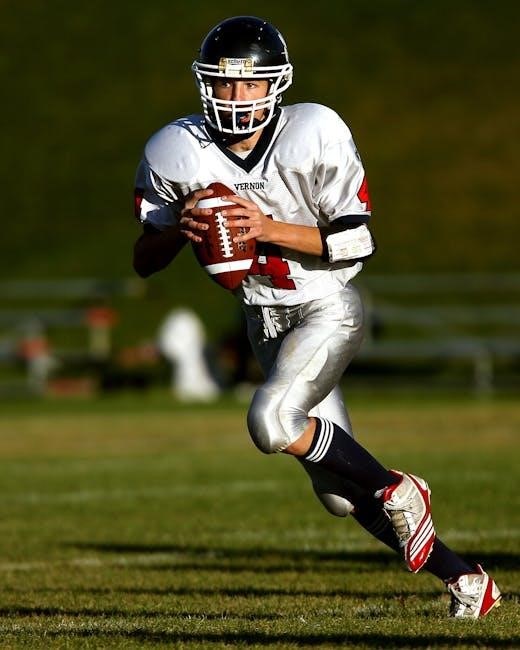
shotgun spread offense playbook pdf
Exploring the Gun-T Multi Wing, a youth playbook, and comprehensive guides reveals a deep dive into formations and strategies—a 2025 resource for coaches.
Historical Development of the Shotgun Spread
Initially emerging as a response to dominant defensive strategies, the shotgun spread’s roots lie in adapting offensive approaches. Resources like Coach Parker’s Gun-T playbook, a 2025 youth football adaptation, demonstrate a modern evolution. Early iterations focused on maximizing spacing and quick passing.
The “Complete Guide to Offensive Football Formations” highlights the strategic depth of formations, influencing the spread’s development. PDF playbooks, readily available, showcase this progression. This offense continually adapts, blending traditional power concepts with spread principles, offering flexibility and challenging defenses.
Core Principles and Philosophy
At its heart, the shotgun spread prioritizes spacing, tempo, and creating favorable matchups. Playbooks, such as the Gun-T Multi Wing, emphasize adaptability for youth levels. The philosophy centers on stressing defenses horizontally and vertically, forcing them to defend the entire field.
PDF resources detail quick-read passing concepts and a commitment to a balanced attack. Utilizing formations from “The Complete Guide,” coaches aim to exploit defensive weaknesses. This system demands a skilled quarterback and receivers capable of precise route running and quick decision-making.
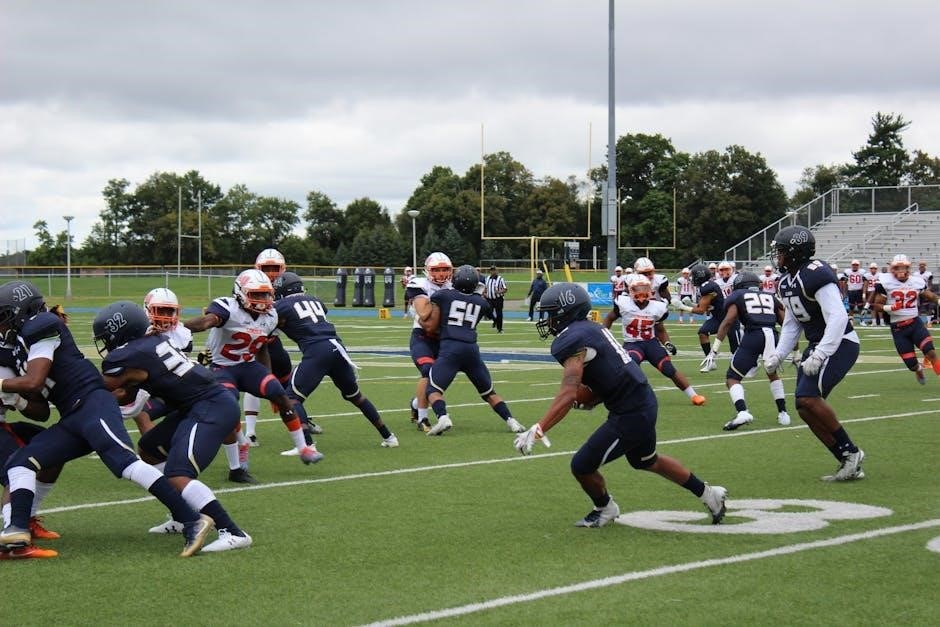
Formations in the Shotgun Spread
PDF playbooks showcase diverse formations—basic shotgun, trips, quads, and empty backfields—adapting strategies detailed in comprehensive offensive formation guides.
Basic Shotgun Formation
The foundational shotgun setup, as detailed in available playbooks, typically features the quarterback positioned approximately five to seven yards behind the center. This spacing allows for enhanced visibility and passing opportunities. One running back usually lines up alongside or slightly behind the quarterback, providing a balanced offensive approach. Three to four wide receivers are spread out to challenge the defense horizontally and vertically.
PDF resources emphasize that this formation’s strength lies in its adaptability, enabling quick passes, designed runs, and play-action opportunities. Coaches utilize this base to build more complex variations, leveraging receiver alignments and pre-snap reads.
Trips Formations and Variations
Trips formations, frequently detailed in shotgun spread playbooks, concentrate three receivers to one side of the field. This creates advantageous matchups and forces defensive adjustments. Variations include shifting the trips alignment, utilizing different receiver splits, and incorporating motion to confuse the defense.
PDF guides highlight that trips formations excel at creating quick passing lanes and run-pass options. Coaches often pair these with inside or outside zone runs, exploiting the defensive focus on the trips side. Playbooks showcase diverse route combinations designed to stress coverage.
Quads Formations and Applications
Quads formations, as detailed in shotgun spread offense playbooks, feature four receivers, maximizing passing threats and stretching the defense horizontally; These sets demand quick reads from the quarterback and precise route running from receivers. PDF resources emphasize utilizing quads to isolate favorable matchups.
Applications include creating opportunities for quick slants, hitches, and screens, alongside deeper routes like posts and corners. Coaches leverage quads to force defensive coverage adjustments, opening running lanes or creating one-on-one passing situations.
Empty Backfield Sets
Empty backfield formations, prevalent in shotgun spread playbooks, remove the running back, prioritizing the passing game and forcing the defense into pass coverage. PDF guides highlight the need for a quick-thinking quarterback capable of rapid progressions and accurate throws.
These sets often feature five receivers, creating numerous receiving options and stressing defensive assignments. Coaches utilize empty formations to exploit coverage weaknesses and create advantageous matchups, demanding disciplined defensive play.

Key Running Concepts
Playbooks detail zone and power run schemes, alongside draw plays and counters, adapting ground attacks within the spread, offering balanced offensive options.
Inside Zone Run
The Inside Zone run, a foundational element within the shotgun spread, emphasizes lateral movement and reading defensive flow. Offensive linemen execute zone blocking, aiming to secure defenders and create running lanes.
This concept relies on the running back’s ability to quickly identify the opening and burst through the line, often hitting the hole between the guard and tackle. Playbooks detail footwork, aiming points, and progression reads for both the offensive line and the back.
Successful execution demands precise timing and coordination, maximizing the effectiveness of the spread formation’s inherent space and creating consistent gains against various defensive fronts.
Outside Zone Run
The Outside Zone run, a key component of spread offenses, focuses on stretching the defense horizontally. Linemen zone block, moving laterally to create a running lane towards the sideline.
This play requires the running back to read the defensive end’s reaction, deciding whether to bend the run inside or continue outside for maximum yardage. Playbooks emphasize proper footwork, aiming points, and the back’s decision-making process.
Effective execution leverages the spread formation’s width, forcing defenders to cover more ground and creating opportunities for explosive plays.
Power Run Schemes
Power run schemes, integrated into spread offenses, utilize pulling guards or tackles to create an extra blocker at the point of attack. These plays aim for downhill, physical running between the tackles, contrasting with zone concepts.
Playbooks detail specific blocking assignments, emphasizing the timing of pulls and the importance of sealing defenders. The fullback or H-back often leads the way, delivering a key block to open the lane.
Successful power runs exploit defensive weaknesses and demonstrate offensive versatility, keeping defenses guessing.
Draw Plays and Counters
Draw plays, deceptively simple, initially appear as pass plays, luring defenders forward before executing a run up the middle; This exploits aggressive pass rushes and creates running lanes. Counter plays involve misdirection, with the running back initially moving in one direction before cutting back against the flow.
Playbooks emphasize selling the pass convincingly on draws and precise timing on counters. Blocking schemes are crucial, requiring offensive linemen to initially pass block before transitioning to run blocking.
Effective execution relies on deception and exploiting defensive over-pursuit.
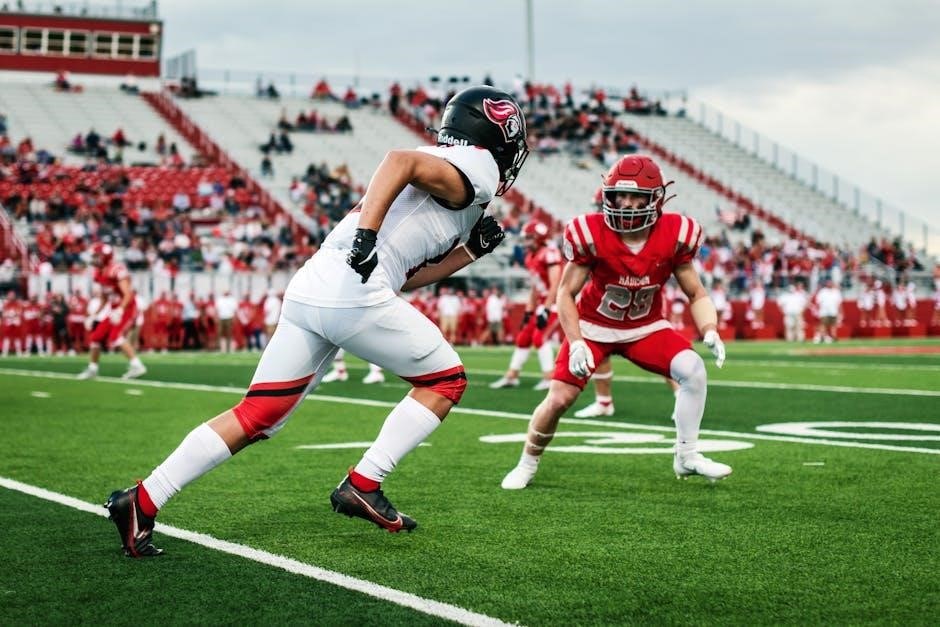
Passing Game Fundamentals
Playbooks detail route trees—slants, hitches, digs, and deep routes—emphasizing precision and timing for quarterbacks and receivers to maximize offensive gains.
Quick Game Concepts (Slants, Hitches)
The shotgun spread’s quick passing game relies on immediate throws to exploit defensive vulnerabilities. Slant routes, with receivers cutting diagonally inward, demand quick reads and accurate delivery by the quarterback. Hitches, short, controlled routes, offer a safe outlet and yardage accumulation.
Playbooks emphasize footwork and timing for both the quarterback and receivers, ensuring rapid release and efficient route running. These concepts are foundational for establishing rhythm and moving the chains against various defensive looks, providing a reliable base for the offense.
Intermediate Route Tree (Digs, Outs, Curls)
Expanding beyond quick throws, the intermediate passing game utilizes routes like digs – in-cutting routes targeting the middle of the field – demanding precise timing and arm strength. Out routes, heading towards the sideline, test cornerbacks’ speed and coverage abilities. Curls, with receivers turning back towards the quarterback, require anticipation.
Playbooks detail route depths and quarterback progressions, emphasizing reading coverage and making quick decisions. Mastering these routes provides a crucial layer to the passing attack, stretching the field and creating opportunities for significant gains.
Deep Passing Concepts (Post, Go, Corner)
Unleashing the vertical threat, deep passing concepts stretch defenses and create explosive play potential. The “Post” route attacks the safety position, requiring accurate throws and receiver speed. A “Go” route is a pure vertical sprint, challenging defensive backs deep downfield. “Corner” routes bend towards the endzone, testing coverage responsibilities.
Playbooks emphasize pre-snap reads, identifying single coverage and exploiting mismatches. Quarterback mechanics and receiver releases are critical for success, demanding precise execution and timing.
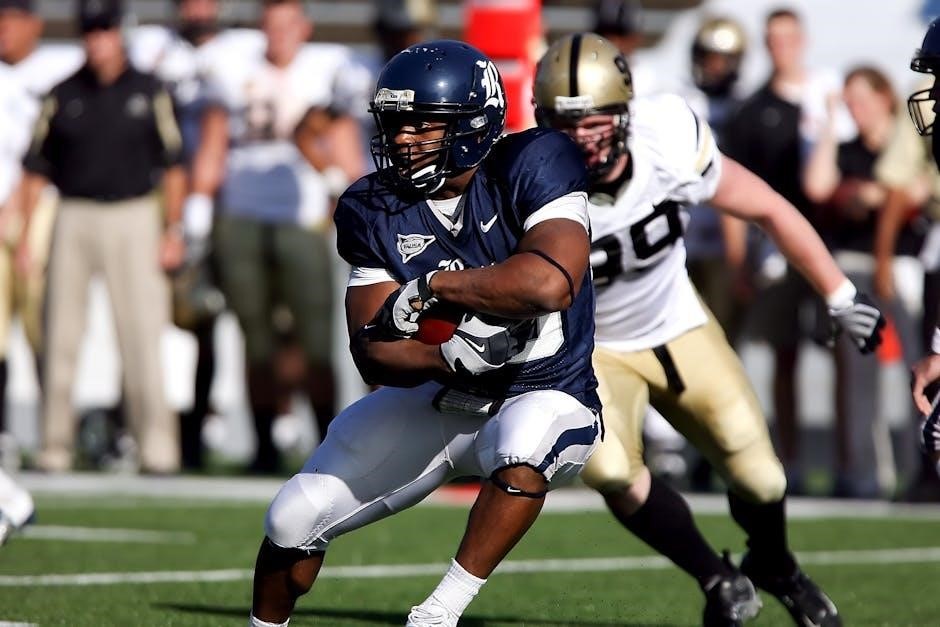
Play-Action Passing
Utilizing deception, play-action passing builds off run-game looks, freezing linebackers and creating passing lanes for quarterbacks—a key element in playbooks.
Play-Action with Inside Zone
Combining the threat of an inside zone run with a pass creates potent play-action opportunities. The quarterback’s initial sell of the handoff must be convincing, mirroring the footwork and body language of a genuine running play. This deception draws linebackers closer to the line of scrimmage, opening up passing windows for intermediate routes like digs and curls.
Successful execution relies on offensive line sell-blocking and receiver route timing. Playbooks often feature variations, including bootleg actions off the play fake, adding another layer of misdirection. This pairing maximizes the effectiveness of both run and pass, keeping defenses guessing and vulnerable.
Play-Action with Outside Zone
Leveraging the outside zone’s wide flow, play-action passes exploit defenders’ pursuit angles. The quarterback’s fake must convincingly stretch the defense horizontally, creating space for receivers on crossing routes or deep outside throws. This scheme is particularly effective against aggressive defenses prone to over-pursuit.
Playbooks detail route combinations designed to attack the vacated areas. Tight ends on delayed releases and receivers running post-corner routes capitalize on the defensive void. Proper offensive line technique, selling the outside zone block, is crucial for a successful deception.
Utilizing Bootleg Actions
Bootleg actions, stemming from shotgun formations, create misdirection and force defenders to hesitate. The quarterback fakes a handoff, then rolls out, extending the play and opening passing lanes. Playbooks emphasize selling the initial fake and maintaining vision downfield;
Successful bootlegs require precise timing and receiver route running. Quick slants, crossing routes, and delayed drags are common targets. The offensive line’s pullers must effectively lead the quarterback, while the backside protection holds. This tactic exploits aggressive pass rushes and creates favorable matchups.
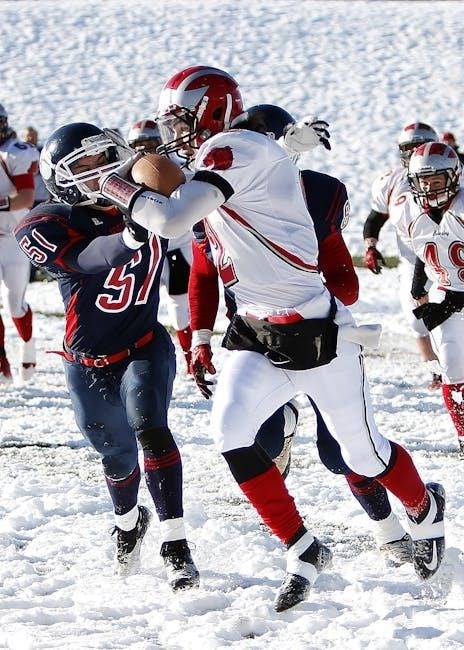
Reading Defenses
Playbooks detail identifying coverage schemes like Cover 2, Cover 3, and man-to-man, alongside recognizing blitz packages for quick adjustments on the field.
Identifying Coverage Schemes (Cover 2, Cover 3, Man)
Understanding defensive coverage is paramount in a shotgun spread offense. Playbooks emphasize recognizing common schemes like Cover 2 – two deep safeties splitting the field – and Cover 3, featuring one deep safety and cornerbacks covering deep thirds.
Man-to-man coverage, where defenders directly follow receivers, requires different passing concepts. Quick pre-snap reads of safety depth and linebacker positioning are crucial for quarterbacks. Identifying these alignments allows for adjustments, exploiting weaknesses and maximizing offensive efficiency, ultimately dictating play calls.
Recognizing Blitz Packages
Effective shotgun spread offenses must anticipate and counter blitzes. Playbooks detail identifying pre-snap indicators – linebacker depth, safety creep, and defensive line stances – signaling potential pressure. Recognizing blitz packages allows for quick adjustments, utilizing check-downs, screens, or hot routes to exploit the aggressive defense.
Protecting the quarterback is vital; playbooks often include specific blocking schemes for various blitz looks. Identifying the blitz’s origin and assigning appropriate protection responsibilities are key to neutralizing the threat and sustaining drives.
Adjusting Plays Based on Defensive Alignment
A successful shotgun spread offense thrives on adaptability. Playbooks emphasize pre-snap reads to identify defensive alignments – coverages, box counts, and linebacker positioning. This allows quarterbacks and coaches to adjust plays at the line of scrimmage, maximizing favorable matchups.
For example, against a light box, a running play might be called, while a stacked box prompts a pass. Recognizing coverage schemes dictates route adjustments, ensuring receivers exploit weaknesses and create separation.
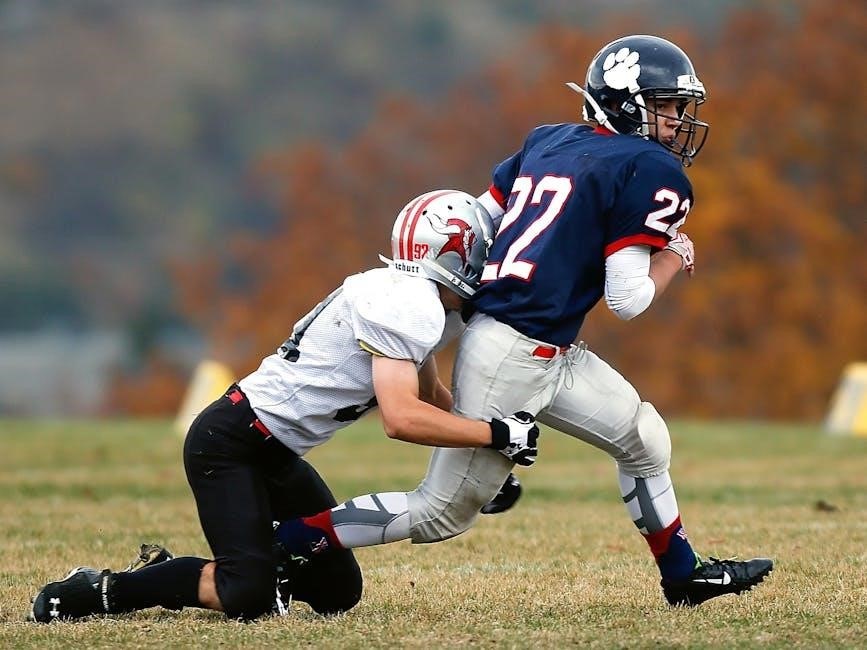
Personnel Groupings
Playbooks detail formations utilizing 11 (1 RB, 3 WR), 10 (4 WR), and 21 (2 RB, 1 TE) personnel, adapting strategies to available player strengths.
11 Personnel (1 RB, 1 TE, 3 WR)
Utilizing 11 personnel—one running back, one tight end, and three wide receivers—offers a balanced approach within the shotgun spread. This grouping provides versatility for both passing and running plays, creating favorable matchups against various defensive schemes. Playbooks emphasize exploiting space with receiver combinations, while the running back offers a reliable check-down option or power run potential. The tight end’s role is crucial for blocking and providing a receiving threat, adding another layer of complexity to offensive play-calling. Coaches leverage this formation to dictate tempo and maintain offensive balance, adapting to defensive adjustments throughout the game.
10 Personnel (1 RB, 0 TE, 4 WR)
Employing 10 personnel – one running back and four wide receivers – maximizes passing opportunities in the shotgun spread. This grouping stretches the defense horizontally, creating one-on-one matchups for receivers and forcing defensive backs into coverage. Playbooks highlight quick passing concepts and deep route combinations to exploit these advantages. The absence of a traditional tight end necessitates skilled receivers who can also contribute as blockers. This personnel package demands a quarterback capable of quick reads and accurate throws, capitalizing on the increased receiving threats.
21 Personnel (2 RB, 1 TE, 2 WR)
Utilizing 21 personnel – two running backs, one tight end, and two wide receivers – introduces a power element to the shotgun spread. This grouping allows for effective run-pass options, leveraging the tight end as a blocker or receiving threat. Playbooks often feature power run schemes and play-action passes designed to exploit the defense’s reaction to the multiple running back sets. It creates versatility, enabling both bruising runs and deceptive passing attacks, demanding defensive adjustments and presenting strategic advantages.
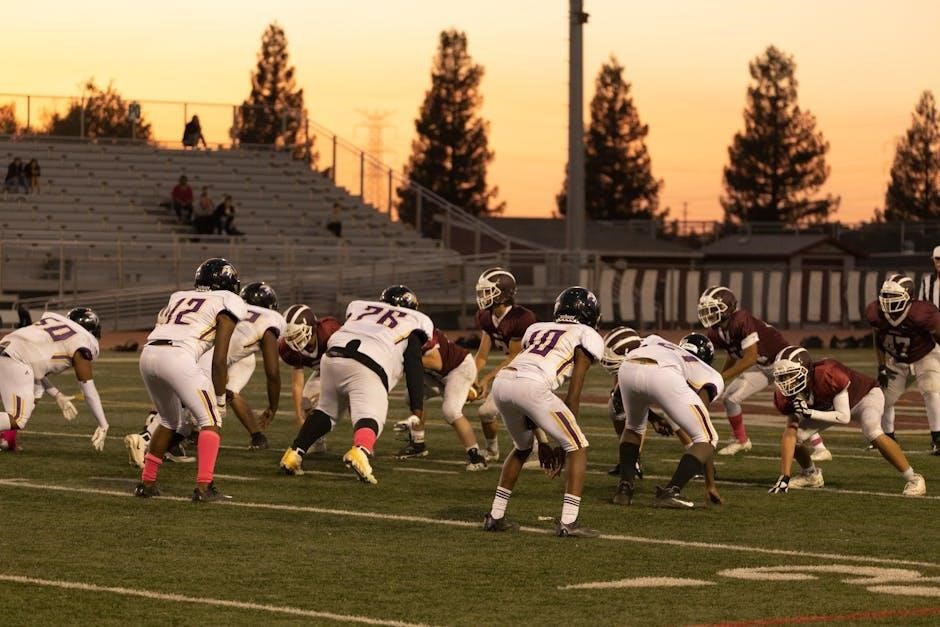
Specialty Plays and Trickery
Playbooks incorporate reverses, flea flickers, and double pass options to surprise defenses, capitalizing on their focus on the spread’s core passing and running concepts.
Reverse Plays
Reverse plays within the shotgun spread offense serve as potent change-of-pace options, exploiting aggressive defensive pursuit and creating advantageous angles for ball carriers. Playbooks detail formations and blocking schemes designed to initially sell a run in one direction, then swiftly flip the ball to a receiver streaking the opposite way.
Successful execution relies on precise timing, deceptive ball-handling, and effective lead blocking from the offensive line and receivers. These plays are particularly effective against defenses heavily focused on stopping the inside run or blitzing linebackers, forcing them to overcommit and leaving gaps for the reversed runner.
Flea Flicker
The flea flicker, a classic trick play, finds a home within the shotgun spread offense playbook as a high-risk, high-reward option. It begins with a handoff, immediately followed by the quarterback receiving the ball back via a short pass, aiming to deceive the defense into believing a run is fully committed.
This deception creates opportunities for deep passing routes, capitalizing on defenders flowing towards the line of scrimmage. Successful flea flickers require precise timing, strong arm strength from the quarterback, and receivers capable of winning one-on-one matchups downfield.
Double Pass Options
Within the playbook, double pass options introduce a layer of complexity, designed to exploit aggressive defenses. These plays involve a lateral or backward pass from the quarterback to a receiver, who then throws the ball downfield to another eligible target.
Successful execution hinges on deception and precise timing, requiring receivers with strong throwing abilities and an offensive line capable of providing adequate protection throughout the multi-stage passing sequence. These plays are best utilized against defenses prone to over-pursuit.
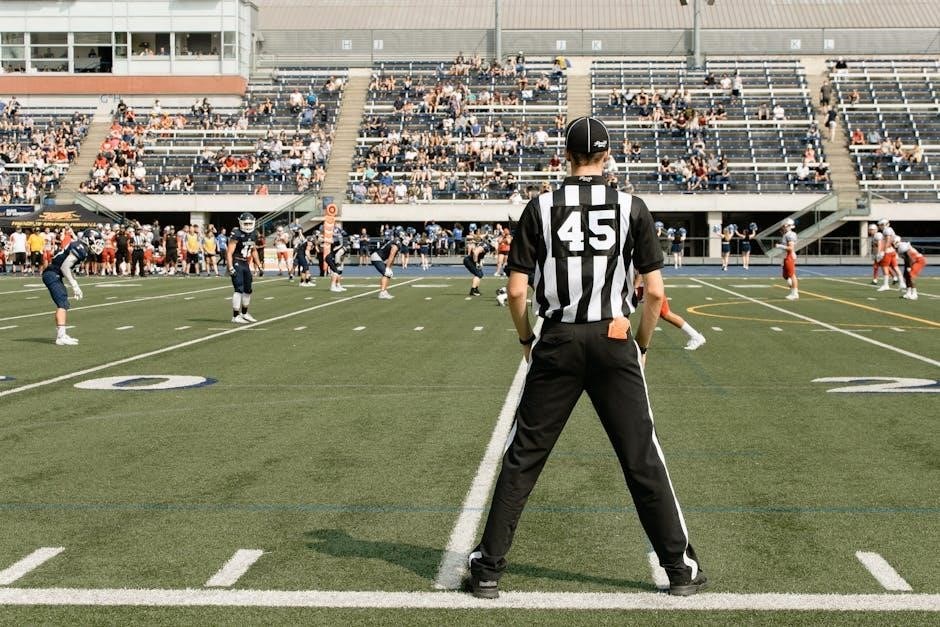
Coaching Points and Drills
Focusing on quarterback footwork, receiver route precision, and offensive line blocking assignments are crucial for playbook success, demanding consistent drill work.
Footwork and Mechanics for Quarterbacks
Developing consistent footwork is paramount in the shotgun spread, enabling quick reads and accurate throws. Drills should emphasize a balanced base, proper weight transfer, and efficient dropbacks. Quarterbacks must master the pocket movement, stepping up or sliding laterally to avoid pressure while maintaining throwing posture.
Mechanics involve a compact throwing motion, a high release point, and a consistent follow-through. Repetitive drills focusing on these elements build muscle memory and improve accuracy. Coaches should prioritize proper grip, arm angle, and body rotation for optimal performance, mirroring techniques found within comprehensive playbooks.
Route Running Precision for Receivers
Achieving precise route running is crucial for success in the shotgun spread, demanding receivers execute routes with sharp cuts, proper depth, and consistent speed. Drills should focus on creating separation from defenders through quickness and technique, mirroring playbook diagrams.
Emphasis must be placed on understanding route concepts, reading coverage, and adjusting routes accordingly. Receivers need to master techniques like stemming, breaking at the correct depth, and creating leverage, all detailed within comprehensive offensive systems and playbooks.
Blocking Assignments for Offensive Line
Effective blocking is paramount in the shotgun spread, requiring linemen to understand their assignments based on play calls and defensive alignments. Playbooks detail specific techniques for zone blocking, pass protection, and creating running lanes.
Linemen must practice footwork, hand placement, and communication to execute blocks effectively, safeguarding the quarterback and opening pathways for running backs. Mastery of these fundamentals, as outlined in coaching resources, is vital for offensive success.
Implementing the Playbook
Successful implementation requires a structured practice schedule, diligent film study of opponents, and adaptable game-day adjustments—key elements for playbook mastery.
Practice Schedule and Progression
Establishing a clear practice progression is vital when adopting a shotgun spread offense. Initial phases should focus on fundamental mechanics – quarterback footwork, receiver route precision, and offensive line blocking assignments. Gradually introduce core running concepts like inside and outside zone, followed by quick passing games.
Dedicated time must be allocated to play-action development, incorporating bootleg actions. Film study sessions should be integrated throughout the week, allowing players to recognize defensive alignments and adjust plays accordingly. Repetition and consistent evaluation are paramount for successful implementation.
Film Study and Opponent Scouting
Thorough film analysis is crucial for maximizing the shotgun spread’s effectiveness. Scout opponents to identify coverage schemes – Cover 2, Cover 3, man-to-man – and recognize blitz packages. Analyze defensive tendencies to anticipate adjustments and exploit weaknesses.
Focus on identifying key personnel and their individual strengths and vulnerabilities. This detailed scouting informs play selection and allows for in-game adjustments, ensuring the offense remains unpredictable and efficient. Consistent film review builds a strategic advantage.
Game Day Adjustments
Effective game day adjustments are paramount when utilizing the shotgun spread. React to defensive alignments, recognizing if they’re prioritizing stopping the run or pass. Identify coverage adjustments and blitz variations quickly.
Have pre-determined adjustments ready based on common defensive responses. Utilize quick-hitting plays to exploit vulnerabilities revealed during the game. Don’t hesitate to abandon unsuccessful concepts and adapt the playbook based on real-time observations for optimal results.